
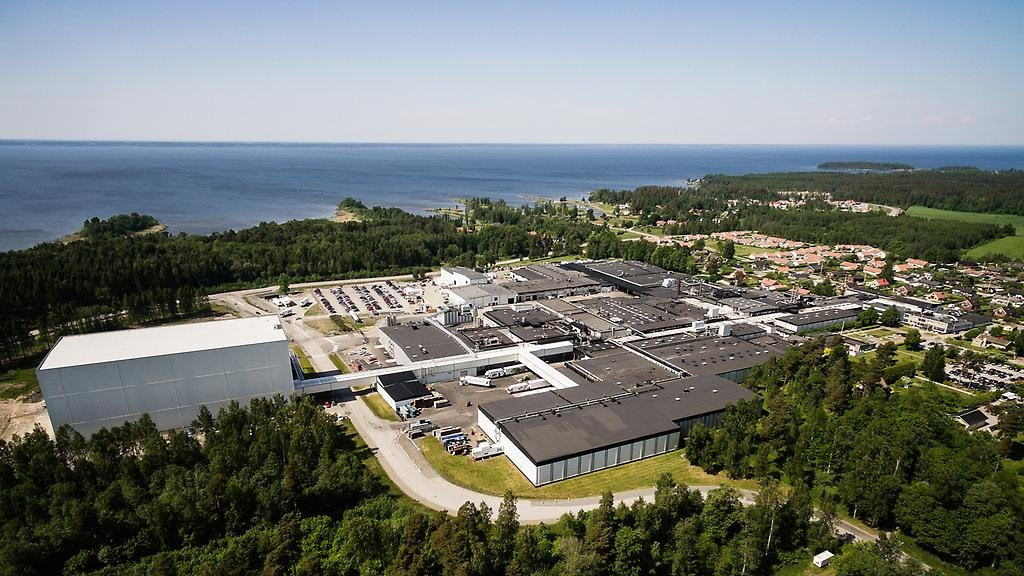
Dafgårds (Gunnar Dafgård AB) is one of Sweden’s most well-known food companies. At its facility in Källby, the company produces large volumes of food every day, including Billy’s Pan Pizza, Gorbys pasties, and dozens of different meatball varieties consumed both in Sweden and internationally. The production lines manufacture thousands of ready-made meals per hour, and operations typically run for 16 hours a day, up to seven days a week. The company employs more than 1,400 people in total.
Behind the high production volumes and well-known products lies a large and multi-stage production environment where personnel safety, food safety, and uninterrupted operations are fundamental prerequisites for the business. In this environment, Dafgårds uses Secapp to ensure lone worker safety and to communicate during disruption and crisis situations.
Responsibility for safety at Dafgårds lies with the company’s own emergency response organization, which reacts immediately to alerts and acts as the first responder in accident and other crisis situations. The company has a dedicated Fire and Safety Manager, and operational preparedness is led by Fire Chief and Operations Manager Berndt Hovler, who shares responsibility for Dafgårds’ on-site fire brigade together with the Fire and Safety Manager.
– We have our own emergency organization on the factory site. When an alert comes in, we must be able to react immediately and keep the situation under control from the very beginning, Hovler says.
Strict safety requirements in food production
In the food industry, safety and quality go hand in hand. Dafgårds operates in accordance with strict food safety standards such as HACCP and ISO 22000. In addition, the company is classified under the Seveso Directive due to its handling of hazardous substances such as ammonia, which brings additional regulatory requirements.
– Product safety is the most important thing for us. We must be able to deliver food that people can eat with complete confidence—there is absolutely no room for compromise. For example, there must be no glass at all in production areas, Hovler explains.
The production lines are long and the processes are highly time-critical: even a single disruption can stop an entire line and cause significant financial losses.
– A five-minute stoppage is never really just five minutes. It can mean more than two hours of downtime before production is back up to full speed again, and at the same time raw materials may be completely wasted. A shutdown can become extremely expensive, Hovler says.
Lone working required a new safety solution
One of Dafgårds’ key safety challenges was related to extensive lone working. There is a large number of maintenance and service personnel working alone across the factory site, moving independently in production areas, technical rooms, and other demanding locations. Before Secapp, lone worker safety relied largely on manual operating models: employees were expected to check in regularly with one another, which in practice meant phone calls approximately once an hour.
– From a safety perspective, an hour is a very long time if someone has fallen or suffered a medical emergency, Hovler says.
Based on Hovler’s experience, many personal safety solutions require the user to press a button themselves to trigger an alarm. This did not meet Dafgårds’ actual needs, as Hovler wanted a solution that automatically detects situations such as a fall.
– I wanted a solution that detects incidents automatically. If someone falls or stops moving, the system must react without the user needing – or even being able – to do anything, Hovler explains.
In the early phase, the lone worker alerting practices required fine-tuning, as alerts could be sent to everyone even in situations where the user had simply forgotten to confirm that they were okay.
For this reason, a confirmation step was added to the alerts: the alert is first sent to the user themselves, who can confirm that the situation is safe if needed. If there is no response, or if the user indicates they need help, the alert is automatically escalated.
– Making the alerts personal lowered the threshold for adopting the system and reduced the number of unnecessary alerts, Hovler says.
Email2Alert improves reach in noisy work environments
Dafgårds has large freezer warehouses and many forklift drivers working in noisy environments. Traditional audible alarms and evacuation signals do not always reach employees.
– We have large freezer warehouses and a lot of forklift drivers. It wouldn’t matter if I installed a hundred evacuation alarms in those areas—they still wouldn’t hear them while driving forklifts, Hovler says.
To address this challenge, Dafgårds sees significant value in Secapp’s Email2Alert functionality, which is being introduced to deliver evacuation alerts directly to the computers installed in forklifts.
– We have high expectations for this solution. The best part is that forklift drivers don’t have to do anything, because the application runs in the background and ensures the alerts are delivered, Hovler says.
Email2Alert is Secapp’s low-threshold integration feature that allows alerts to be triggered automatically based on email. In practice, any system capable of sending emails can act as an alert trigger. When an email from an approved sender arrives at a Secapp-defined email address, Secapp automatically sends a predefined alert to the right recipients.
At present, Secapp operates at Dafgårds separately from the actual monitoring and alarm systems that handle access control, fire alarms, and technical monitoring. According to Hovler, however, the Email2Alert functionality opens up the possibility of connecting these worlds in a controlled manner.
– I see integration coming through this Email2Alert functionality, Hovler says.
The goal is to forward alert data from existing systems into Secapp, which then takes care of formatting the alert and targeting it to the right people based on the situation.
– The idea is that I can send alert information into Secapp, and the system automatically routes it into the correct message template, for example depending on whether it’s an evacuation in building one or building four, Hovler explains.
In addition to Email2Alert, Secapp offers several other ready-made integration options that allow different systems and data sources to be flexibly connected as part of the alerting and communication solution.

Supporting the in-house fire brigade and incident management
Secapp is also used to support Dafgårds’ own emergency response organization and incident management. Previously, alert situations led to widespread phone calls, which made it difficult to operate effectively during an incident.
– In the middle of a situation, it’s difficult to talk on the phone, even though information still needs to be communicated, Hovler says.
With Secapp, the emergency organization can send pre-prepared messages to management and communications teams. This ensures controlled information flow and allows operational leadership to focus on handling the situation itself.
From pilot to part of daily safety operations
Secapp was introduced at Dafgårds through a pilot project. During the pilot, particular attention was paid to ensuring that the solution was easy to use for end users. Based on user feedback, alert models were refined, and Secapp became part of daily safety operations.
Today, Secapp is used at Dafgårds by both the in-house emergency organization and lone-working professionals such as electricians, mechanics, and HVAC technicians. The immobility-based alert is configured to react quickly, within just one minute.
– Secapp is easy to use, flexible, and adaptable to our needs. It is particularly effective for lone worker safety because it does not require separate devices, and alerts reach the right people even in noisy environments, Hovler says.
This is how Dafgårds uses Secapp:
-
Lone worker safety: Secapp automatically monitors lone working and reacts quickly to immobility or falls without requiring the user to manually trigger an alarm.
-
Alert escalation and personalization: Alerts are first sent to the user themselves and escalated only when needed, reducing unnecessary alerts and lowering the threshold for system adoption.
-
Supporting the in-house emergency organization and fire brigade: Secapp supports Dafgårds’ own emergency response in disruption and crisis situations and facilitates communication with management and communications teams without disruptive phone calls.
-
Ensuring information flow during incidents: With predefined message templates, situations can be communicated quickly and in a controlled manner, allowing operational leadership to focus on managing the incident.
-
Improving reach in noisy environments: With Email2Alert, evacuation and alert information can be delivered directly to forklift-mounted computers in environments where audible alarms are insufficient.
-
Building a flexible and easily expandable safety solution: At Dafgårds, Secapp currently functions as a personal alerting and communication solution, with the option to expand its role in the future through Email2Alert integrations with other systems.


Dafgårds (Gunnar Dafgård AB) is one of Sweden’s most well-known food companies. At its facility in Källby, the company produces large volumes of food every day, including Billy’s Pan Pizza, Gorbys pasties, and dozens of different meatball varieties consumed both in Sweden and internationally. The production lines manufacture thousands of ready-made meals per hour, and operations typically run for 16 hours a day, up to seven days a week. The company employs more than 1,400 people in total.
Behind the high production volumes and well-known products lies a large and multi-stage production environment where personnel safety, food safety, and uninterrupted operations are fundamental prerequisites for the business. In this environment, Dafgårds uses Secapp to ensure lone worker safety and to communicate during disruption and crisis situations.
Responsibility for safety at Dafgårds lies with the company’s own emergency response organization, which reacts immediately to alerts and acts as the first responder in accident and other crisis situations. The company has a dedicated Fire and Safety Manager, and operational preparedness is led by Fire Chief and Operations Manager Berndt Hovler, who shares responsibility for Dafgårds’ on-site fire brigade together with the Fire and Safety Manager.
– We have our own emergency organization on the factory site. When an alert comes in, we must be able to react immediately and keep the situation under control from the very beginning, Hovler says.
Strict safety requirements in food production
In the food industry, safety and quality go hand in hand. Dafgårds operates in accordance with strict food safety standards such as HACCP and ISO 22000. In addition, the company is classified under the Seveso Directive due to its handling of hazardous substances such as ammonia, which brings additional regulatory requirements.
– Product safety is the most important thing for us. We must be able to deliver food that people can eat with complete confidence—there is absolutely no room for compromise. For example, there must be no glass at all in production areas, Hovler explains.
The production lines are long and the processes are highly time-critical: even a single disruption can stop an entire line and cause significant financial losses.
– A five-minute stoppage is never really just five minutes. It can mean more than two hours of downtime before production is back up to full speed again, and at the same time raw materials may be completely wasted. A shutdown can become extremely expensive, Hovler says.
Lone working required a new safety solution
One of Dafgårds’ key safety challenges was related to extensive lone working. There is a large number of maintenance and service personnel working alone across the factory site, moving independently in production areas, technical rooms, and other demanding locations. Before Secapp, lone worker safety relied largely on manual operating models: employees were expected to check in regularly with one another, which in practice meant phone calls approximately once an hour.
– From a safety perspective, an hour is a very long time if someone has fallen or suffered a medical emergency, Hovler says.
Based on Hovler’s experience, many personal safety solutions require the user to press a button themselves to trigger an alarm. This did not meet Dafgårds’ actual needs, as Hovler wanted a solution that automatically detects situations such as a fall.
– I wanted a solution that detects incidents automatically. If someone falls or stops moving, the system must react without the user needing – or even being able – to do anything, Hovler explains.
In the early phase, the lone worker alerting practices required fine-tuning, as alerts could be sent to everyone even in situations where the user had simply forgotten to confirm that they were okay.
For this reason, a confirmation step was added to the alerts: the alert is first sent to the user themselves, who can confirm that the situation is safe if needed. If there is no response, or if the user indicates they need help, the alert is automatically escalated.
– Making the alerts personal lowered the threshold for adopting the system and reduced the number of unnecessary alerts, Hovler says.
Email2Alert improves reach in noisy work environments
Dafgårds has large freezer warehouses and many forklift drivers working in noisy environments. Traditional audible alarms and evacuation signals do not always reach employees.
– We have large freezer warehouses and a lot of forklift drivers. It wouldn’t matter if I installed a hundred evacuation alarms in those areas—they still wouldn’t hear them while driving forklifts, Hovler says.
To address this challenge, Dafgårds sees significant value in Secapp’s Email2Alert functionality, which is being introduced to deliver evacuation alerts directly to the computers installed in forklifts.
– We have high expectations for this solution. The best part is that forklift drivers don’t have to do anything, because the application runs in the background and ensures the alerts are delivered, Hovler says.
Email2Alert is Secapp’s low-threshold integration feature that allows alerts to be triggered automatically based on email. In practice, any system capable of sending emails can act as an alert trigger. When an email from an approved sender arrives at a Secapp-defined email address, Secapp automatically sends a predefined alert to the right recipients.
At present, Secapp operates at Dafgårds separately from the actual monitoring and alarm systems that handle access control, fire alarms, and technical monitoring. According to Hovler, however, the Email2Alert functionality opens up the possibility of connecting these worlds in a controlled manner.
– I see integration coming through this Email2Alert functionality, Hovler says.
The goal is to forward alert data from existing systems into Secapp, which then takes care of formatting the alert and targeting it to the right people based on the situation.
– The idea is that I can send alert information into Secapp, and the system automatically routes it into the correct message template, for example depending on whether it’s an evacuation in building one or building four, Hovler explains.
In addition to Email2Alert, Secapp offers several other ready-made integration options that allow different systems and data sources to be flexibly connected as part of the alerting and communication solution.
Supporting the in-house fire brigade and incident management
Secapp is also used to support Dafgårds’ own emergency response organization and incident management. Previously, alert situations led to widespread phone calls, which made it difficult to operate effectively during an incident.
– In the middle of a situation, it’s difficult to talk on the phone, even though information still needs to be communicated, Hovler says.
With Secapp, the emergency organization can send pre-prepared messages to management and communications teams. This ensures controlled information flow and allows operational leadership to focus on handling the situation itself.
From pilot to part of daily safety operations
Secapp was introduced at Dafgårds through a pilot project. During the pilot, particular attention was paid to ensuring that the solution was easy to use for end users. Based on user feedback, alert models were refined, and Secapp became part of daily safety operations.
Today, Secapp is used at Dafgårds by both the in-house emergency organization and lone-working professionals such as electricians, mechanics, and HVAC technicians. The immobility-based alert is configured to react quickly, within just one minute.
– Secapp is easy to use, flexible, and adaptable to our needs. It is particularly effective for lone worker safety because it does not require separate devices, and alerts reach the right people even in noisy environments, Hovler says.
This is how Dafgårds uses Secapp:
-
Lone worker safety: Secapp automatically monitors lone working and reacts quickly to immobility or falls without requiring the user to manually trigger an alarm.
-
Alert escalation and personalization: Alerts are first sent to the user themselves and escalated only when needed, reducing unnecessary alerts and lowering the threshold for system adoption.
-
Supporting the in-house emergency organization and fire brigade: Secapp supports Dafgårds’ own emergency response in disruption and crisis situations and facilitates communication with management and communications teams without disruptive phone calls.
-
Ensuring information flow during incidents: With predefined message templates, situations can be communicated quickly and in a controlled manner, allowing operational leadership to focus on managing the incident.
-
Improving reach in noisy environments: With Email2Alert, evacuation and alert information can be delivered directly to forklift-mounted computers in environments where audible alarms are insufficient.
-
Building a flexible and easily expandable safety solution: At Dafgårds, Secapp currently functions as a personal alerting and communication solution, with the option to expand its role in the future through Email2Alert integrations with other systems.